
Inverter pumps and conventional automatic water pumps both help increase water pressure, but they differ in how the motor and water pressure are controlled. An inverter pump adjusts its motor speed according to water demand at different times, while a conventional automatic water pump typically operates by switching on and off based on water pressure or flow conditions.
These differences affect water pressure consistency, operating noise, and energy consumption under different usage conditions. Therefore, when choosing between an inverter pump and a conventional automatic water pump, you should consider the number of water outlets used simultaneously, water usage patterns, and the water pressure requirements of your home.
An inverter pump uses a motor speed control system that adjusts according to water demand. When water usage is low, the motor can run at a lower speed. As water demand increases, the system automatically adjusts the motor speed to match the demand, helping maintain more consistent water pressure as water usage changes.
Suitable for: Homes with multiple water outlets, rain showers, or frequent water usage on different floors.
A conventional automatic water pump typically operates based on water pressure or flow conditions. The pump starts when water is used and stops when water usage ends, according to the system's control settings. Most conventional automatic pumps operate at a fixed motor speed rather than adjusting their speed according to water demand like an inverter pump.
Suitable for: Homes with general water usage, where only a few water outlets are used simultaneously and a simple, straightforward system is preferred.
Both types of pumps can be used to boost water pressure in the home, but they differ in how they control motor operation and respond to water demand. Choosing the right pump depends on water usage patterns, the number of water outlets used simultaneously, and the home's water pressure requirements.
Key Factors to Consider Before Choosing Between an Inverter Pump and a Conventional Fixed-Speed Automatic Water Pump
1. Motor Speed Control
An inverter pump can adjust its motor speed according to water demand, while most conventional fixed-speed automatic water pumps operate at a constant motor speed and switch on and off based on the system's control settings.
2. Water Pressure Consistency
An inverter pump is suitable for situations where water demand varies, such as when multiple water outlets are used simultaneously or frequently turned on and off, as it can adjust its operation to match changing water demand.
3. Energy Consumption
An inverter pump can reduce its motor speed when water demand is low, potentially reducing energy consumption under certain operating conditions. However, actual energy savings depend on the pump model and water usage patterns.
4. Operating Noise
When the motor operates at a lower speed, an inverter pump may produce less noise. However, the actual noise level depends on the pump model, installation conditions, and piping system.
5. Suitable Types of Homes
Inverter pumps are suitable for homes with multiple water outlets or frequently changing water demand, while conventional fixed-speed automatic water pumps are suitable for general water pressure boosting applications and simpler water supply systems.
In Short
An inverter pump adjusts its motor speed according to water demand, helping maintain water pressure close to the set value. In contrast, a conventional fixed-speed automatic water pump typically starts and stops the motor based on water pressure or flow conditions.
Both types of pumps can be used for domestic water pressure boosting. The appropriate pump should be selected based on the required flow rate (Flow), total head (Head), and actual water usage patterns.
Inverter pumps are suitable for homes where multiple water outlets are used simultaneously or water demand frequently changes, such as homes with multiple showers, rain showers, or several occupants. This is because the system can adjust the motor speed to match water demand at different times.
Consider an Inverter Pump When:
Conventional automatic water pumps are suitable for homes that require general water pressure boosting, have only a few water outlets used simultaneously, and have relatively consistent water usage patterns, without the need for variable-speed pressure control.
Suitable for:
DAYUAN FP400 and LEALPUMPE PMA-400 are examples of variable-speed booster pumps designed to adjust motor speed in response to changing water demand. However, the two models differ in their performance characteristics and control systems. The maximum flow rate (Qmax) and maximum head (Hmax) generally do not occur at the same operating point. Therefore, it is important to evaluate the pump performance curve (Pump Curve) at the actual operating point. Before selecting a pump, also consider the number of water outlets used simultaneously, required water pressure, and installation conditions to ensure the pump meets your home's water supply requirements.
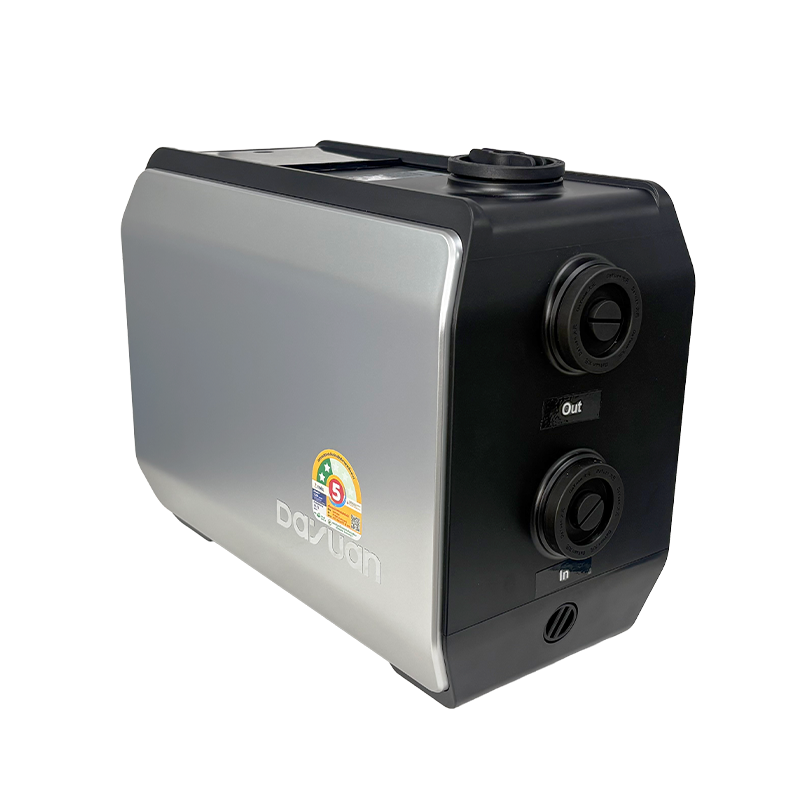
Power: 400 W
Maximum Flow Rate: 75 L/min
Maximum Head: 30 m
Adjustable Pressure: 1.5 / 2.0 / 2.5 / 3.0 bar
Equipped with a Permanent Magnet Motor and Inverter System, the pump adjusts its operation to maintain the set water pressure. It offers 4 adjustable pressure settings, making it suitable for homes with multiple water outlets that require controlled water pressure to meet different usage needs.
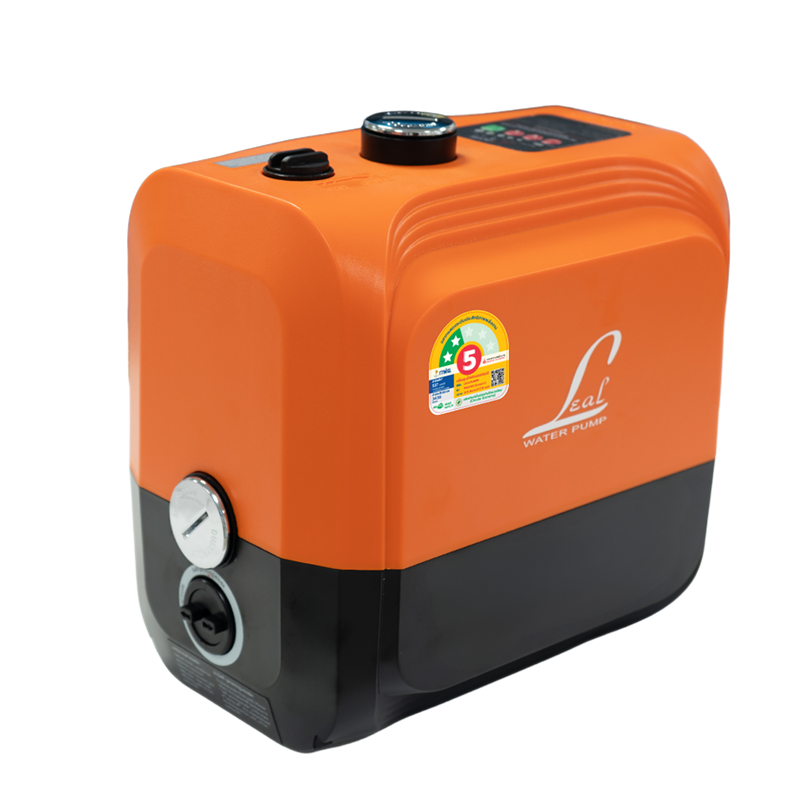
Power: 432 W
Maximum Flow Rate: 80 L/min
Maximum Head: 52 m
In-Out Let: 1"
Equipped with a Permanent Magnet Motor and Adaptive Variable Frequency Control System for water pressure boosting, the pump delivers a maximum head of 52 m and features Dry-Run Protection. It also supports a maximum suction lift of up to 9.5 m, as specified in the product catalog.
If your home has multiple water outlets used simultaneously, uses rain showers, or frequently experiences changes in water demand, An inverter pump or a variable frequency pump system is an option worth considering. Because it can adjust its operation to match changing water demand at different times.
However, if your home uses only a few water outlets at a time, has relatively simple water usage patterns, and requires a pump for general water pressure boosting, A conventional fixed-speed automatic water pump can still be a suitable choice.
อ่านเพิ่มเติม: ปั๊มน้ำบ้านกี่วัตต์ถึงจะพอ? วิธีเลือก 180, 370, 400 และ 750 วัตต์ให้เหมาะกับการใช้งาน
Key Factors to Consider Before Choosing a Water Pump
Do not choose a water pump based solely on whether it is an inverter model or its wattage rating. Instead, consider the following factors: Flow rate, total head, the number of water outlets used simultaneously, the piping system, and installation conditions. should also be considered.
Not necessarily. Inverter pumps are not always more energy-efficient in every situation. They can adjust motor speed according to water demand, potentially reducing energy consumption under certain operating conditions. However, actual energy savings depend on the pump model, the number of water outlets used, and each home's water usage patterns.
Not every two-storey house requires an inverter pump. If only a few water outlets are used at a time and the water supply system is relatively simple, a conventional fixed-speed automatic water pump with suitable performance may be sufficient. However, if multiple water outlets are used simultaneously or more consistent water pressure is required as water demand changes, an inverter pump is another option worth considering. Before making a decision, it is important to check each pump model’s required flow rate (Flow), total head (Head), and pump performance curve (Pump Curve) to ensure it meets the home's actual water supply requirements.
Homes with rain showers can use either an inverter pump or a conventional fixed-speed automatic water pump. The key is to check the required flow rate (Flow) and water pressure of the rain shower, as some models require higher water flow than standard showerheads. An inverter pump is a suitable option for homes that require consistent water pressure, especially when multiple water outlets are used simultaneously or water demand frequently changes. However, it is important to review the pump performance curve (Pump Curve) to ensure that the selected pump can deliver sufficient flow rate and head to meet the actual requirements of the rain shower, other water-using fixtures, and the piping system.
A Permanent Magnet Motor and an Inverter are not the same thing. A Permanent Magnet Motor uses permanent magnets to generate a magnetic field, while an Inverter or Variable Frequency Drive (VFD) is a control system used to regulate motor speed. Some water pump models combine a Permanent Magnet Motor with an Inverter System to adjust motor speed according to changing water demand, such as the DAYUAN FP400 and LEALPUMPE PMA Series. However, having a Permanent Magnet Motor does not necessarily mean that a water pump is equipped with an inverter-based variable-speed control system.
A water pump should not be selected based on wattage alone, as motor power does not indicate the flow rate and water pressure a pump can deliver at its actual operating point. Even pumps with the same wattage rating may have different performance characteristics. When choosing a water pump, it is important to consider the required flow rate (Flow), total head (Head), number of water outlets used simultaneously, pipe size and length, and installation conditions. The pump performance curve (Pump Curve) should also be reviewed to ensure the selected pump can deliver sufficient flow rate and pressure to meet the actual requirements of your home's water supply system.
Share details such as the number of floors, bathrooms, water outlets used simultaneously, rain shower usage, pipe size, and installation conditions with the TPE team. Our team can help you determine the appropriate flow rate, total head, and pump type to suit your home's water supply needs.