
How Many Watts Does a Home Water Pump Need? The answer depends on the number of floors, the number of water outlets used simultaneously, and the required water pressure. Home water pumps with power ratings of 180 W, 370 W, 400 W, and 750 W have different performance characteristics and are suitable for different applications. Therefore, choosing a home water pump should not be based on wattage alone. It is also important to consider the required flow rate (Flow) and total head (Head) to ensure the pump meets the actual requirements of your home's water supply system.
Before making a purchase, it is important to review the pump performance curve (Pump Curve) to determine whether the pump can deliver sufficient water flow at the actual operating point. This article compares home water pumps with different power ratings and introduces examples of WALRUS and DAYUAN water pumps to help you choose the most suitable model for your home's water supply requirements.
Wattage (W) is a unit of power, not a direct measure of water pressure or pumping performance. A water pump with a higher wattage rating does not necessarily deliver stronger water pressure. To evaluate a pump’s actual performance, it is important to consider the flow rate (Flow), total head (Head), and pump performance curve (Pump Curve) together.
Flow rate refers to the amount of water a pump can deliver. If the flow rate is insufficient, water pressure at each outlet may drop when several outlets are used at the same time.
When selecting a water pump, the Total Dynamic Head (TDH) should be determined by considering the elevation difference between the water source and the point of use, required water pressure, and friction losses caused by pipe length, pipe diameter, elbows, valves, and other fittings. These factors must be evaluated to ensure the pump can deliver adequate water pressure throughout the system, especially to bathrooms on the upper floor.
180 W, 370 W, 400 W, and 750 W water pumps have different performance characteristics and are suitable for different applications. However, wattage alone cannot determine which water pump is best suited for your home. Before purchasing a water pump, consider the number of floors, the number of water outlets used simultaneously, required flow rate (Flow), and total head (Head). It is also important to review the pump performance curve (Pump Curve) to ensure the selected pump meets your home's actual water supply requirements.
When selecting a water pump’s wattage, it is important to consider the number of floors, the number of water outlets used simultaneously, and the required flow rate (Flow) and total head (Head) at the actual operating point. A water pump should not be selected based on wattage alone.
When comparing 180 W, 370 W, 400 W, and 750 W water pumps, a higher wattage rating does not necessarily mean the pump is suitable for every home. It is important to compare the flow rate (Flow) each pump can deliver at the required total head (Head) by reviewing the pump performance curve (Pump Curve) of each model. The water pressure control system should also be considered to ensure the selected pump meets the home's actual water usage requirements.
In Short
180 W, 370 W, 400 W, and 750 W home water pumps should be selected based on actual water usage requirements, rather than wattage alone.
Key factors to consider include the number of floors, the number of water outlets used simultaneously, required flow rate (Flow), and total head (Head).
It is also important to review the pump performance curve (Pump Curve) of each model to ensure the selected pump can deliver sufficient water flow and pressure to meet the actual requirements of your home's water supply system.
180 W water pumps, such as the WALRUS WQ200B, and 370 W water pumps, such as the WALRUS WQ400B, are examples of automatic water pumps with different motor power ratings. When selecting the most suitable model, it is important to consider the number of water outlets used simultaneously, as well as the flow rate (Flow) and total head (Head) indicated on each model’s pump performance curve (Pump Curve). Pump selection should not be based solely on the number of floors in a home or the pump’s wattage rating.
400 W water pumps, such as the DAYUAN FP400, and 750 W water pumps, such as the WALRUS WQ800B, have different control systems and performance characteristics. A higher wattage rating does not necessarily mean a pump is suitable for every home. When choosing a water pump, it is important to consider the number of water outlets used simultaneously, required flow rate (Flow), and total head (Head) at the actual operating point. Before purchasing, review each model’s pump performance curve (Pump Curve) and water pressure control system to ensure the selected pump meets your home's actual water supply requirements.
Examples of home water pumps from WALRUS and DAYUAN include models with motor power ratings of 180 W, 370 W, 400 W, and 750 W. Each model has different operating systems and performance characteristics. When selecting the most suitable water pump, it is important to consider the number of floors, the number of water outlets used simultaneously, required flow rate (Flow), and total head (Head). The pump performance curve (Pump Curve) should also be reviewed to verify the pump’s performance at the actual operating point. It is important to note that maximum flow rate (Qmax) and maximum head (Hmax) do not occur simultaneously at the same operating point.
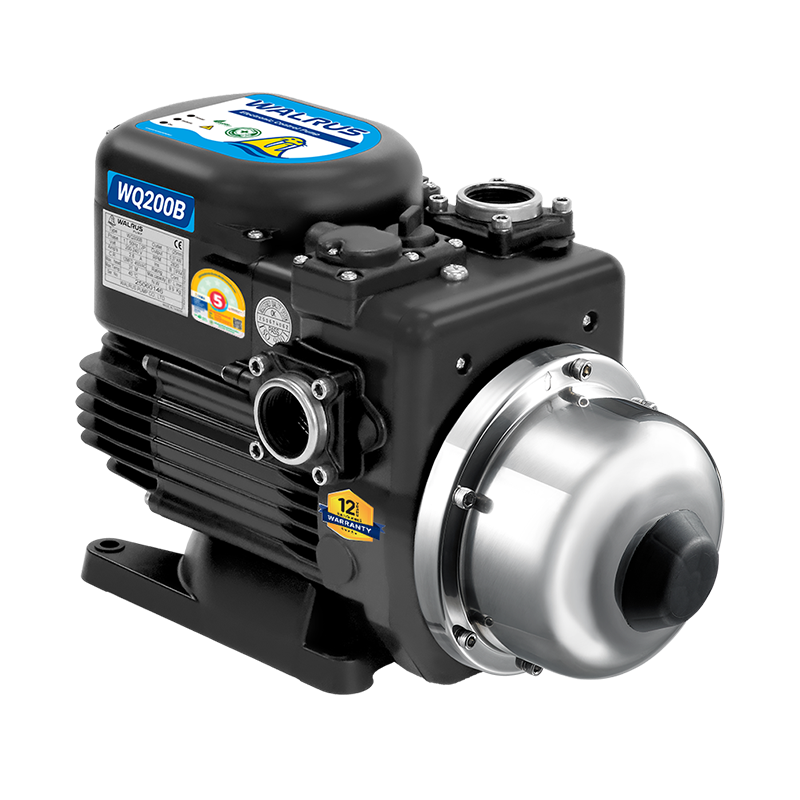
Power: 180 W
Maximum Flow Rate: 58 L/min
Maximum Head: 24 m
In-Out Let: 1"
A quiet automatic water pump featuring a fanless water-cooling system for reduced operating noise. Ideal for homes with fewer water outlets that require consistent water pressure boosting.
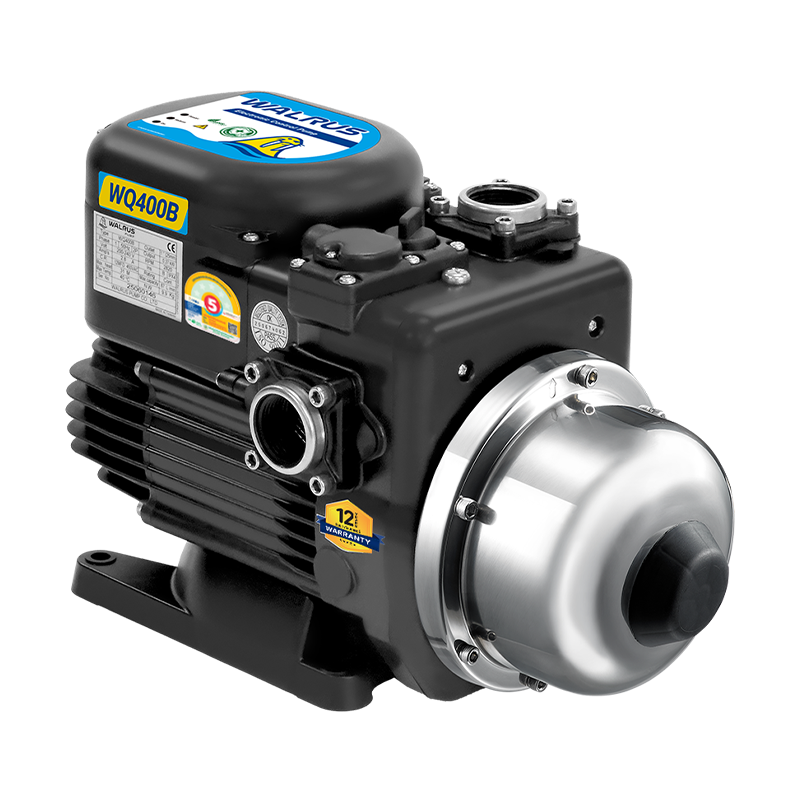
Power: 370 W
Maximum Flow Rate: 87 L/min
Maximum Head: 31 m
In-Out Let: 1"
A quiet automatic water pump featuring a water-cooling system, delivering a higher flow rate than the 180 W model. Ideal for homes with multiple water outlets that require consistent water pressure.
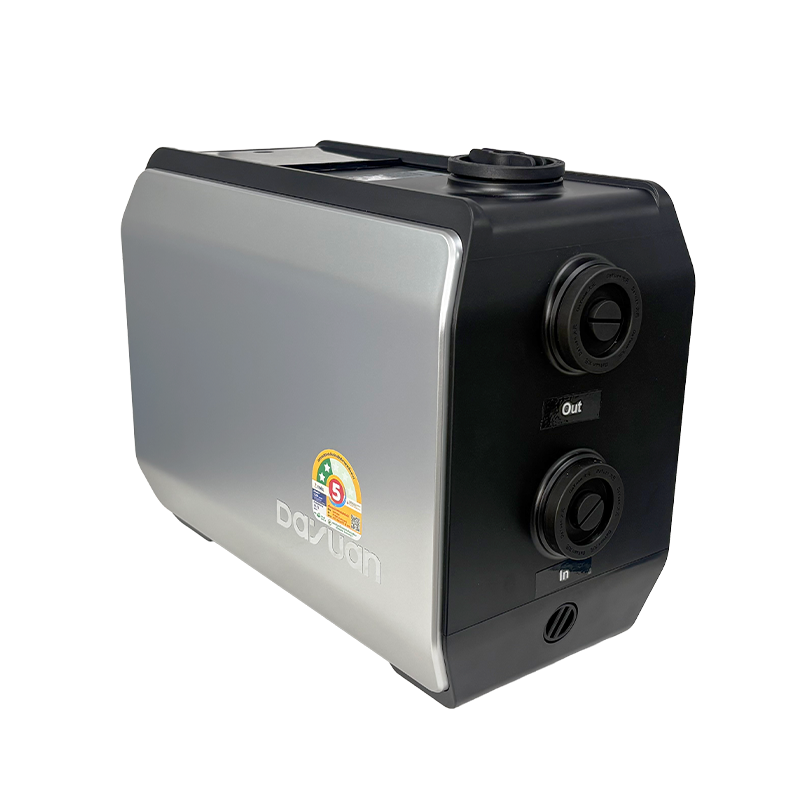
Power: 400 W
Maximum Flow Rate: 75 L/min
Maximum Head: 30 m
Adjustable Pressure: 1.5 / 2.0 / 2.5 / 3.0 bar
Inverter system adjusts pump operation according to water pressure, making it suitable for homes that require stable pressure control and frequently use multiple water outlets at the same time.
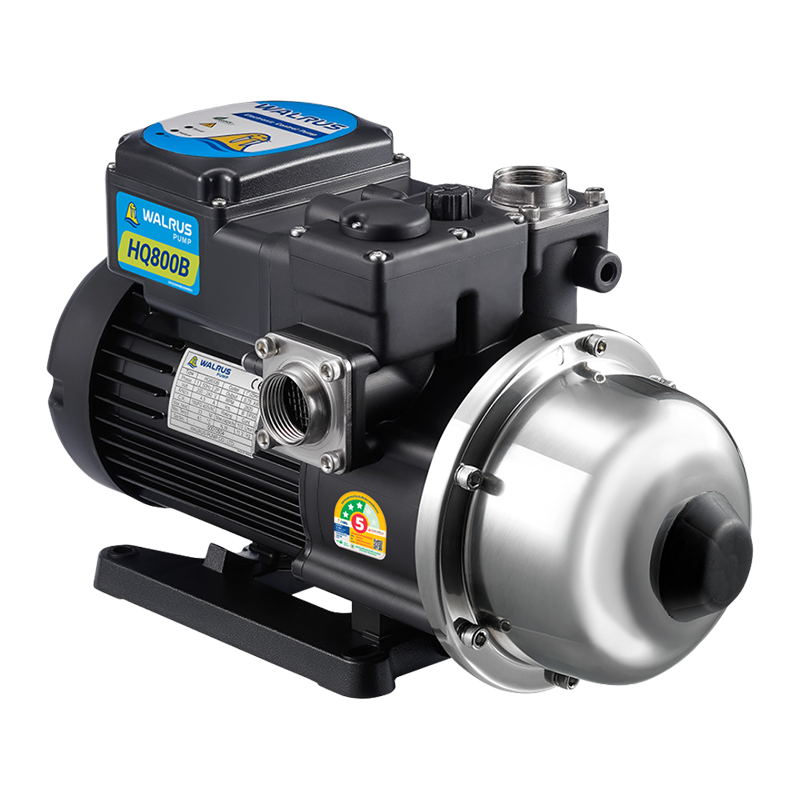
Power: 750 W
Maximum Flow Rate: 110 L/min
Maximum Head: 33 m
In-Out Let: 1"
A 750 W automatic water pump delivers a higher maximum flow rate than the 180 W and 370 W models. It is suitable for homes with multiple water outlets. However, the flow rate (Flow) and total head (Head) should be verified using the pump performance curve (Pump Curve) to ensure the pump meets the actual requirements of the home's water supply system.
Before purchasing a home water pump, it is important to check the number of floors, the number of water outlets used simultaneously, the height and length of the piping system, and the required water pressure. These factors directly affect the required flow rate (Flow) and total head (Head) that the pump must deliver. Evaluating these requirements carefully will help you choose the most suitable water pump for your home's water supply system, rather than selecting a pump based on wattage alone.
Every home has a different building height and water pump installation location. It is important to measure the vertical distance from the pump's installation point to the highest water outlet, such as a bathroom on the upper floor, to determine the required pump head (Head) and water pressure. The number of floors alone is not sufficient to determine the appropriate wattage for a home water pump.
It is important to assess the number of water outlets that may be used simultaneously, such as showers, faucets, washbasins, and washing machines. Using multiple water outlets at the same time increases the required flow rate (Flow). If the pump cannot supply sufficient water, water flow and pressure may decrease. Therefore, selecting the right water pump should be based on actual simultaneous water usage, rather than simply counting the total number of bathrooms in the home.
Pipe diameter, pipe length, and the number of elbows affect friction loss (Friction Loss) as water flows through the piping system. Piping systems with smaller pipe diameters or longer pipe runs may experience greater pressure losses, increasing the total head (Head) required from the pump. Therefore, it is important to evaluate the piping system and required flow rate (Flow) together before selecting the appropriate water pump size.
Different types of water fixtures and appliances, such as standard showers, rain showers, and water heaters, require different water pressure levels. It is important to check the minimum water pressure and flow rate (Flow) specified for each fixture or appliance, as well as the required water pressure at the point of use. These requirements should be evaluated together with the vertical height and pressure losses in the piping system to select a water pump that can deliver sufficient flow rate and pressure at the actual operating point.
There is no one-size-fits-all answer when choosing a 180 W, 370 W, 400 W, or 750 W home water pump, as the most suitable model depends on the number of floors, the number of water outlets used simultaneously, and the required water pressure. A 180 W water pump may be sufficient for homes with lower water demand, while homes with multiple water outlets may require a higher-performance water pump to meet their water supply needs.
Examples of water pumps for comparison include the WALRUS WQ200B (180 W), WALRUS WQ400B (370 W), DAYUAN FP400 (400 W), and WALRUS HQ800B (750 W). Each model has different performance characteristics and control systems. Before purchasing, it is important to review each model’s pump performance curve (Pump Curve) to verify the flow rate (Flow) at the required total head (Head), ensuring the selected pump can deliver sufficient water to meet the home's actual usage requirements.
Conclusion: You do not need to choose the water pump with the highest wattage rating. Instead, select a pump with performance characteristics that match your home's actual water supply requirements.
A two-story house may be suitable for a 180–400 W water pump, depending on the number of water outlets used simultaneously, the height of the house, and the required water pressure. If multiple water outlets are used at the same time or certain fixtures require a higher flow rate, a higher-performance water pump may be necessary. Before making a decision, it is important to check the flow rate (Flow) and total head (Head) using the pump performance curve (Pump Curve). Water pump selection should not be based on wattage alone.
Not necessarily. Wattage indicates a water pump’s power rating, not its water pressure directly. A higher-wattage water pump may deliver a greater flow rate, but this does not necessarily mean it will provide higher water pressure under all operating conditions. To choose the most suitable pump for your home, compare the flow rate (Flow) and total head (Head) using each model’s pump performance curve (Pump Curve) at the actual operating point.
180 W and 370 W water pumps differ in motor power and water delivery performance. For example, the WALRUS WQ200B (180 W) has a maximum flow rate (Qmax) of 58 L/min and a maximum head (Hmax) of 24 m. In comparison, the WALRUS WQ400B (370 W) has a maximum flow rate (Qmax) of 87 L/min and a maximum head (Hmax) of 31 m. The 370 W model therefore offers higher maximum performance ratings. However, selecting the most suitable pump still depends on the number of water outlets used simultaneously and each model’s pump performance curve (Pump Curve). It is important to note that maximum flow rate (Qmax) and maximum head (Hmax) do not occur simultaneously at the same operating point.
Flow Rate (Flow) refers to the volume of water a pump can deliver over a specific period, typically measured in liters per minute (L/min). Head refers to the total head a pump can generate, which is related to the vertical height, required water pressure, and friction losses in the piping system. When selecting a water pump, it is important to evaluate Flow and Head together using the pump performance curve (Pump Curve) to ensure the pump can deliver sufficient water at the actual operating point. It is important to note that maximum flow rate (Qmax) and maximum head (Hmax) do not occur simultaneously at the same operating point.
"Share your details—number of floors, bathrooms, simultaneous outlets, pipe size, and installation type—and let the TPE team recommend the right pump for your home.