
When selecting an industrial water pump, factories should first determine the required flow rate (Flow) and then calculate the Total Dynamic Head (TDH) based on elevation differences, required pressure, and friction losses within the piping system. Next, evaluate the required flow rate and TDH against the pump performance curve (Pump Curve) to select a pump with an operating point within the manufacturer's recommended operating range. The type of liquid and actual operating conditions should also be considered to ensure the pump is suitable for the application. An industrial water pump should not be selected based solely on motor power or pump size.
Thai Pinnacle Engineering Co., Ltd. (TPE) has a team of experienced engineers ready to provide expert consultation on selecting the right industrial water pumps for your applications. Our engineering team can help evaluate technical specifications, analyze actual site requirements, and recommend suitable pump types for various industrial applications, including water transfer and supply, pressure boosting, drainage, and wastewater treatment systems. This helps customers confidently select the right pumps to meet their specific operational needs.
Flow rate refers to the volume of liquid a pump can deliver per unit of time, typically measured in liters per minute (L/min) or cubic meters per hour (m³/h). Factories should determine the actual flow rate required by their systems to select a pump that can meet their operational demands.
Head refers to the energy per unit weight of liquid that a pump must provide to overcome pressure requirements, elevation differences, and losses within the piping system. It is typically expressed in meters (m). The Total Dynamic Head (TDH) should be calculated based on the actual site conditions and system requirements.
Pipe length, pipe diameter, elbows, valves, and other fittings contribute to friction losses and pressure drops within the piping system, which affect the total head required. If these losses are not properly considered, the pump may fail to deliver the required flow rate.
The actual operating point of a pump is determined by the intersection of the Pump Curve and System Curve. Engineers use this information to evaluate whether the pump can deliver the required flow rate and head under actual operating conditions, while also assessing its operating efficiency and overall suitability for the system.
Selecting an industrial water pump without properly matching the flow rate and head to the system's requirements can affect water supply capacity, pressure, energy efficiency, and the continuity of production processes. Therefore, pump selection should be based on the actual operating point, together with the technical specifications and operating conditions of the industrial system.
Potential Problems Caused by Selecting Flow Rate and Head That Do Not Match Industrial Pump System Requirements
1. Insufficient Water Flow to Meet System Demand
If the pump cannot deliver the required flow rate, it may result in an insufficient water supply for production processes, cooling systems, or wastewater treatment systems.
2. Inadequate Water Pressure for System Requirements
Selecting a pump with a head lower than the system requires may result in insufficient water pressure to deliver water to the intended destination. Conversely, excessively high water pressure may place unnecessary strain on equipment and the piping system.
3. Unnecessary Energy Consumption
If a pump operates far from its Best Efficiency Point (BEP), it may consume more energy than necessary for the flow rate delivered, resulting in higher operating costs.
4. Increased Risk of Vibration and Wear
Operating a pump outside the manufacturer’s recommended operating range may increase vibration and place additional stress on certain pump components, potentially leading to more frequent maintenance requirements and a shorter pump service life.
In Short
When selecting an industrial water pump, it is important to consider the flow rate, total head, and operating point together to ensure the pump operates efficiently and meets the system’s requirements while minimizing performance-related risks and operating costs. The TPE engineering team can help evaluate actual site conditions and technical requirements to support proper pump selection.
Selecting the right industrial water pump requires a clear understanding of the application requirements and actual site conditions. The TPE engineering team can help evaluate technical specifications, determine the required flow rate and total head, and recommend the most suitable pump type to meet the specific needs of your factory.
1. Required Flow Rate (Flow)
Specify the required volume of liquid to be pumped per hour, such as in m³/h or L/min, to help engineers determine the appropriate flow rate for the system.
2. Required Head and Pressure
Specify the elevation levels at the suction and discharge points, along with the required pressure at the point of use, to support the calculation of the Total Dynamic Head (TDH).
3. Operating Conditions
Specify whether the pump will operate continuously for 24 hours or intermittently, including the number of operating hours per day.
1. Liquid Type and Properties
Specify whether the liquid is clean water, wastewater, or another type of fluid, including its temperature, viscosity, and any relevant contaminants or suspended solids.
2. Pipe Size and Length
Specify the pipe diameter, pipe length, number of elbows, valves, and other fittings to help engineers calculate pressure losses within the piping system.
3. Installation Conditions and Electrical Requirements
Specify the suction-side water level, installation conditions, supply voltage, and control system requirements, such as 220V / 380V power supply or inverter control, based on the actual system configuration.
A Pump Curve (Pump Performance Curve) shows the relationship between a pump’s flow rate and head. For centrifugal pumps, the head generally decreases as the flow rate increases. Reading the pump performance curve helps engineers determine whether a pump can deliver the required flow rate and head to meet the system’s actual operating requirements.
1. Check the Horizontal Axis (Q – Flow Rate)
The horizontal axis (Q – Flow Rate) represents the volume of water a pump can deliver, typically measured in cubic meters per hour (m³/h) or liters per minute (L/min).
2. Check the Vertical Axis (H – Head)
The vertical axis (H – Head) represents the pump’s head, measured in meters (m). It indicates the energy the pump can provide to overcome pressure requirements, elevation differences, and losses within the piping system.
3. Read the Values from the Pump Performance Curve
Start with the flow rate required by the factory, then trace vertically upward until it intersects the Pump Performance Curve. From this intersection, read the corresponding head value to evaluate the pump’s performance at the required flow rate.
Key Points to Remember: Maximum Flow Rate (Qmax) and Maximum Head (Hmax) generally do not occur at the same operating point. Therefore, these two maximum values should not be used together to define a single pump operating point.
1. What Is a Pump Operating Point?
The actual operating point of a pump is determined by the intersection of the Pump Curve and System Curve, indicating the flow rate and head at which the pump operates within that specific system.
2. What Is the Best Efficiency Point (BEP)?
The Best Efficiency Point (BEP) is the point at which a pump operates at its highest efficiency, as indicated on the manufacturer's pump performance curve. When selecting a pump, the operating point should be within the manufacturer's recommended operating range.
3. How Do Engineers Use This Information?
The engineering team evaluates the pump’s operating point against the system’s required flow rate and head, while also considering pump efficiency, motor power, and the recommended operating range.
Key Points to Remember: The pump’s operating point does not need to coincide exactly with the Best Efficiency Point (BEP), but it should remain within the manufacturer’s specified operating range.
Key Factors to Consider When Reading a Pump Performance Curve
An industrial water pump should not be selected based solely on its maximum flow rate (Qmax) or maximum head (Hmax), as these maximum values generally do not occur at the same operating point. Instead, the required flow rate, total head, actual operating point, and manufacturer’s recommended operating range should all be considered.
The TPE engineering team is ready to help evaluate pump performance curves and system requirements to recommend the most suitable industrial water pump for your actual site conditions.
GSD industrial water pumps are available in various types for water transfer and supply, pressure boosting, and wastewater treatment applications. Each pump type has different flow rate and head ranges, as well as specific operating characteristics and applications. The TPE engineering team is ready to provide expert consultation and help evaluate pump performance curves (Pump Curves) to recommend the most suitable pump type and model for your factory's specific system requirements.
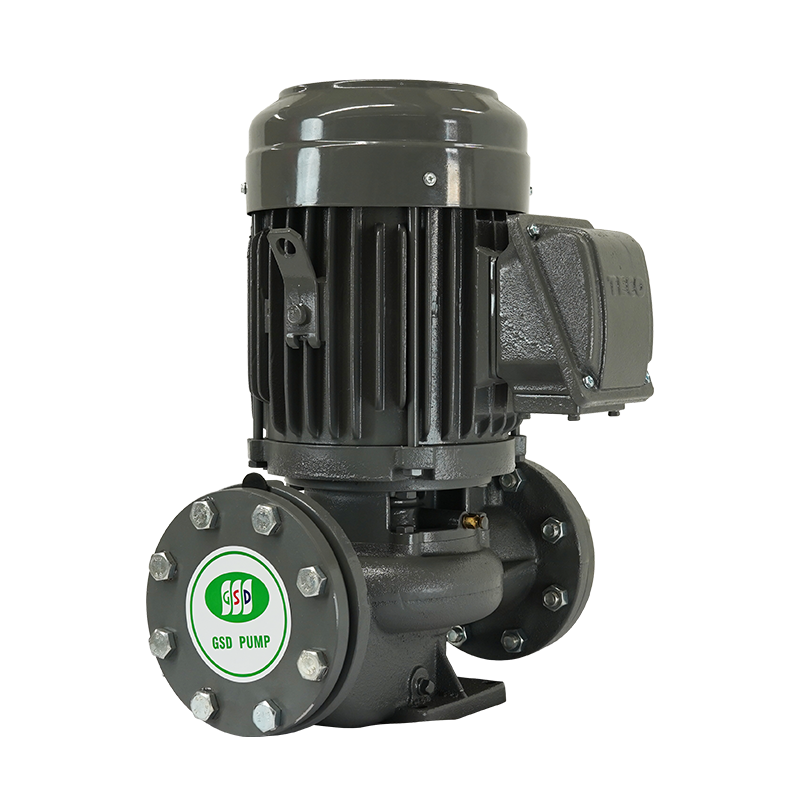
A vertical in-line centrifugal pump with a space-saving design, suitable for water supply, water transfer, and circulation systems in industrial plants. The appropriate pump model should be selected based on the required flow rate, total head, and pump performance curve (Pump Curve).
Suitable for: Industrial Water Supply Systems / Chiller Systems / Water Circulation Applications
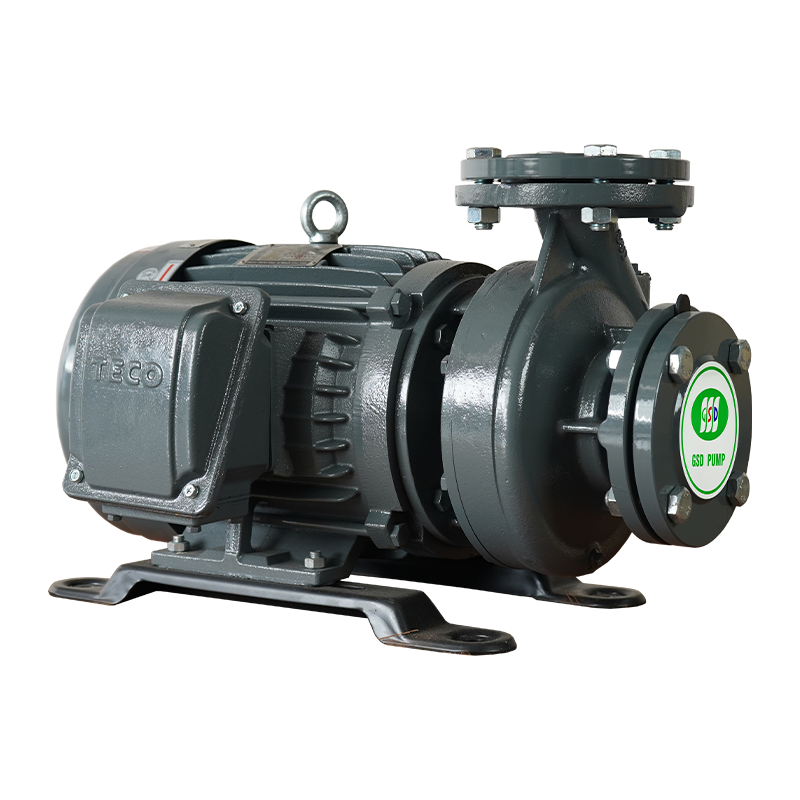
A horizontal close-coupled centrifugal pump designed for water supply, water transfer, and circulation applications in industrial plants. The appropriate pump size should be selected based on the required flow rate, total head, and pump performance curve (Pump Curve) to ensure it meets the system’s operating requirements.
Suitable for: Industrial Water Supply Systems / Chiller Systems / Condensate Systems
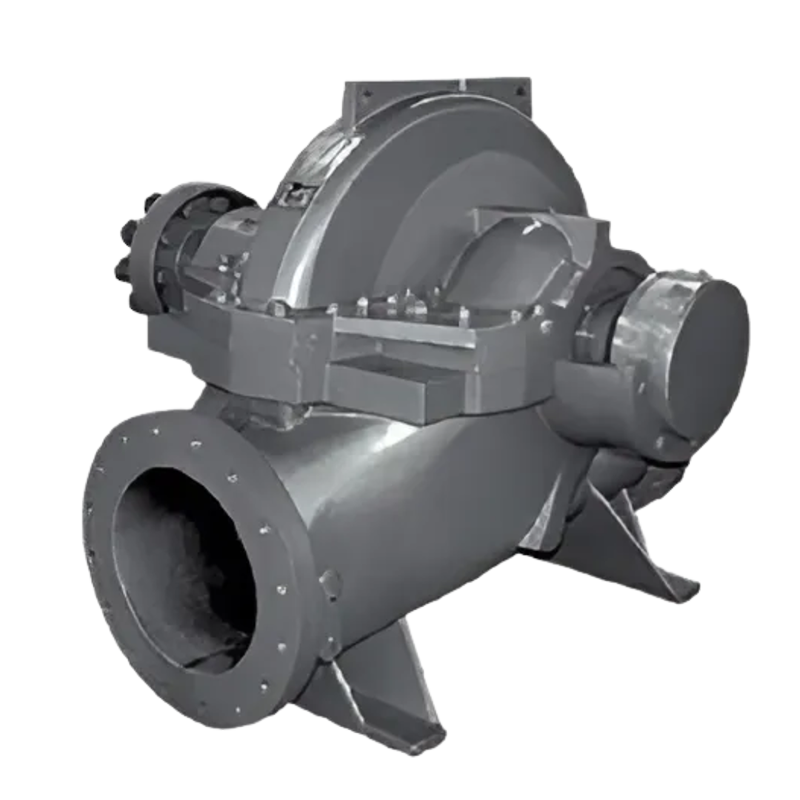
A double-suction split-case centrifugal pump designed for high-flow water transfer and supply applications, making it suitable for industrial water distribution systems. The appropriate pump model should be selected based on the required flow rate, total head, and pump performance curve (Pump Curve) to ensure it meets the system’s operating requirements.
Suitable for: Industrial Water Transfer Systems / Large-Scale Cooling Water Systems / High-Flow Water Supply Systems
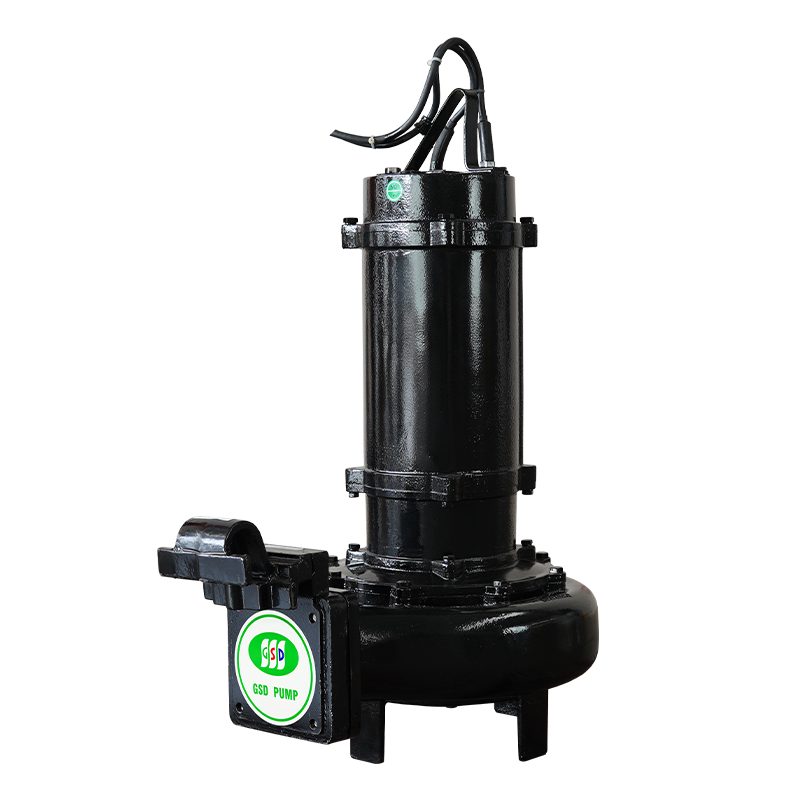
A submersible sewage pump designed for pumping wastewater and sewage in industrial applications. Equipped with a non-clog impeller, it allows solids within the pump’s specified handling capacity to pass through, helping reduce the risk of clogging. Suitable for industrial wastewater drainage applications, with pump selection based on the required flow rate, total head, and maximum solids-handling size.
Suitable for: Industrial Wastewater Treatment Systems / Sewage Pumping Stations / Industrial Wastewater Drainage Applications
Thai Pinnacle Engineering Co., Ltd. (TPE) has a team of engineers ready to provide expert consultation on industrial water pump selection. Our team evaluates technical factors such as flow rate, total head, piping system requirements, and actual operating conditions. By analyzing the pump performance curve (Pump Curve) and operating point, we help assess pump performance and recommend the most suitable pump type and model to meet your factory’s specific requirements.
Our services cover water supply and transfer, pressure boosting, water circulation systems, and wastewater treatment applications. We also help evaluate the technical specifications of GSD products to ensure the recommended pumps are suitable for the actual site conditions and operating requirements.
Prepare Your Information for Evaluation by the TPE Engineering Team
Provide the required flow rate (Flow) • total head and pressure requirements (Head) • liquid type and properties • piping system details • installation and operating conditions for evaluation by the TPE engineering team.
The TPE engineering team can use this information to evaluate and recommend the most suitable pump for your factory’s specific system requirements.
Selecting the right industrial water pump should begin by determining the required flow rate (Flow) and calculating the Total Dynamic Head (TDH) based on elevation differences, required pressure, and friction losses in the piping system. Next, review the pump performance curve (Pump Curve) to identify a suitable operating point that meets the system’s requirements and falls within the manufacturer’s recommended operating range.
In addition, factors such as the type of liquid, operating temperature, pump materials, suction conditions, and operating requirements should be considered to ensure efficient and reliable pump performance.
The TPE engineering team is ready to provide expert consultation, evaluate technical specifications, and recommend the most suitable pump type and model based on actual site conditions and application requirements.
Key Factors to Consider Before Selecting an Industrial Water Pump
An industrial water pump should not be selected based solely on motor power, maximum flow rate (Qmax), or maximum head (Hmax). Instead, consider the required flow rate, Total Dynamic Head (TDH), pump performance curve (Pump Curve), operating point, and liquid properties together to ensure the pump is properly matched to the actual system requirements.
When selecting an industrial water pump, both flow rate and head must be considered together. Start by determining the required flow rate, then calculate the Total Dynamic Head (TDH) based on the system's operating conditions. Next, review the pump performance curve (Pump Curve) to identify a pump with a suitable operating point
Qmax and Hmax should not be used directly to determine a pump’s operating point, as these maximum values generally do not occur simultaneously in centrifugal pumps. Instead, refer to the pump performance curve (Pump Curve) to determine the flow rate and head the pump can deliver at the system’s required operating point.
Total Dynamic Head (TDH) is calculated by considering the elevation difference within the system, pressure difference between the suction and discharge points, and friction losses caused by pipes, elbows, valves, and other fittings. Both suction-side and discharge-side conditions must be evaluated to determine the total head the pump needs to deliver at the required flow rate.
The Operating Point is the actual point at which a pump operates, determined by the intersection of the Pump Curve and System Curve. The Best Efficiency Point (BEP) is the point at which the pump operates at its highest efficiency. When selecting a pump, the operating point should fall within the manufacturer’s recommended operating range, while considering pump efficiency, system requirements, and proximity to the BEP.
When consulting the TPE engineering team for industrial pump selection, you should provide details such as the required flow rate, elevation and pressure requirements, pipe size and length, liquid type and properties, electrical supply specifications, and pump operating conditions. The TPE engineering team can use this information to calculate the Total Dynamic Head (TDH), evaluate pump performance curves (Pump Curves), and recommend the most suitable industrial water pump type or model for your specific site conditions and operational requirements.
The TPE engineering team is ready to provide expert consultation on industrial water pump selection. Simply share your required flow rate, total head, liquid type and properties, piping system details, and operating conditions. Our engineers will help evaluate the pump performance curve (Pump Curve) and recommend the most suitable GSD pump type or model to meet your factory’s specific system requirements.